
How Can Powder Coating Improve Your Product Finishing Process?
Powder Coating Is a Final Stage That Should Be Planned Early
When evaluating a manufactured component, powder coating is an important part of the production process. Manufacturers should consider finishing requirements alongside materials, dimensions, tolerances, functionality, and cost rather than treating powder coating as a secondary decision.
That early consideration matters because the selected finish can directly affect how well a component performs throughout its service life. Durability, corrosion resistance, appearance, chemical exposure, environmental conditions, and long-term maintenance requirements can all depend on selecting the right finishing process. A poor finish or an inconsistent application can lead to premature wear, surface damage, rework, and higher lifecycle costs, even when the underlying component has been manufactured correctly.
This is why powder coating plays such a valuable role in modern manufacturing. It provides a durable and consistent finish for metal components while supporting a wide range of functional, protective, and aesthetic requirements.
Understanding what powder coating is, how the process works, and when it makes sense can help manufacturers make better decisions before components reach the finishing stage.
What Is Powder Coating?
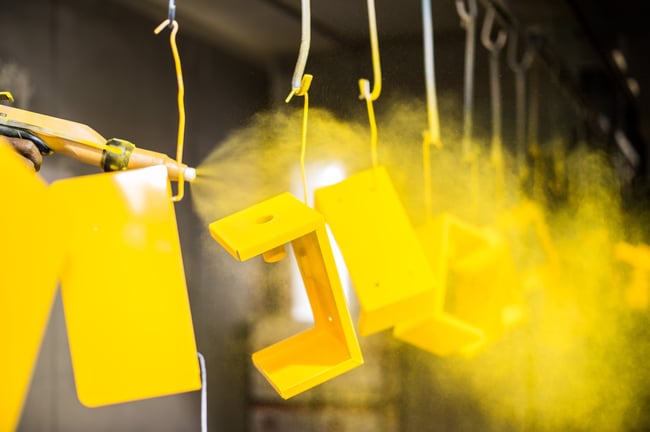
Powder coating is a dry finishing process commonly used to protect and enhance metal parts and components. Unlike traditional liquid paint, powder coating does not use a liquid carrier or solvent to apply the finish. Instead, finely ground particles made from resins, pigments, curing agents, and additives are electrostatically charged and sprayed onto a grounded component.
The electrical charge causes the powder particles to adhere to the surface. The coated component is then placed in a curing oven, where heat causes the powder to melt, flow, and chemically bond into a continuous protective finish.
Once properly cured, the coating creates a hard and durable surface that can help resist chipping, scratching, fading, corrosion, moisture, chemical exposure, and general wear.
Powder coating is available in a wide range of colors, gloss levels, textures, and performance formulations, allowing manufacturers to balance visual appearance with specific environmental and operational requirements.
What Is Powder Coating Used For?
Powder coating is used across a wide range of industries because it can provide both functional protection and a consistent finished appearance.
Powder coating is most commonly applied to steel, aluminum, stainless steel, and other conductive metals capable of withstanding the required curing temperature.
Advancements in low-temperature and ultraviolet curing technologies have also expanded powder coating compatibility to certain heat-sensitive materials, including some plastics, wood products, and medium-density fiberboard. However, compatibility depends on the substrate, formulation, equipment, and performance requirements of the application.
How Does Powder Coating Work?
The component is first cleaned and chemically pretreated to remove oils, dirt, oxidation, and other contaminants. Proper pretreatment also prepares the surface for adhesion and helps improve long-term corrosion resistance.
Once the component is cleaned, rinsed, and dried, any areas that should remain uncoated are masked. The part is then placed on a rack or conveyor and properly grounded.
An electrostatic spray gun applies the powder. The charged particles are attracted to the grounded metal surface, allowing the powder to cover the component before curing.
The coated part then enters an oven. During the curing process, the powder melts, flows across the surface, and forms a continuous coating. Quality checks may include coating thickness, color consistency, gloss level, surface appearance, coverage, adhesion, cure performance, masking accuracy, and checks for defects or contamination.
The process may appear straightforward, but the final result depends on careful control of pretreatment, grounding, application settings, powder chemistry, part temperature, oven conditions, and curing time.
What Is Changing In Powder Coating?
Powder coating itself is not new, but the technology and manufacturing processes supporting it continue to evolve.
One of the most significant areas of development is low-bake and short-cure powder technology. Traditional powder coatings often require relatively high curing temperatures. Newer formulations can cure at lower temperatures or complete the curing process more quickly.
Depending on the specific system and formulation, these advancements can help manufacturers:
- Reduce oven energy consumption
- Increase production throughput
- Shorten curing cycles
- Coat a wider range of substrates
- Reduce thermal exposure for sensitive components
- Improve overall finishing efficiency
Automation is another major area of progress. Modern powder coating lines can use automated conveyors, programmable spray systems, controlled oven profiles, and repeatable application parameters to improve consistency across production runs.
These developments do not eliminate the need for experienced operators or strong process controls. Instead, they give manufacturers additional tools for improving efficiency, repeatability, and production visibility.
When Is Powder Coating a Good Fit?
Durability Is a Priority: Powder coating creates a hard, protective surface that can withstand impact, abrasion, moisture, and general wear better than many conventional finishes. This makes it particularly valuable for industrial equipment, outdoor components, transportation products, enclosures, and infrastructure applications.
Corrosion Resistance Is Needed: When combined with proper surface preparation and the correct coating formulation, powder coating can help protect metal components from corrosion. The required performance depends on the substrate, pretreatment system, coating chemistry, coating thickness, and environmental exposure. Components used outdoors or in corrosive environments may require different preparation and coating specifications than products used in controlled indoor settings.
Finish Consistency Is Mandatory: Automated application systems can help maintain consistent coating coverage, color, texture, and thickness across larger production quantities. This repeatability is especially important when components must match across assemblies or remain visually consistent from one production run to the next.
Appearance Is a Priority: Powder coatings are available in many colors, textures, and gloss levels. Manufacturers can select smooth, matte, glossy, textured, metallic, or specialty finishes depending on branding, design, visibility, and functional requirements.
Production Volumes Need Scaling: Powder coating can support individual batches, mixed production requirements, and larger recurring production programs. Automated conveyor lines are particularly useful for higher-volume programs, while batch systems can provide greater flexibility for large, unusually shaped, or lower-volume components.
Environmental Consideration: Powder coatings are typically formulated without the solvents used in many conventional liquid coatings. As a result, they generally produce negligible or very low volatile organic compound emissions during application. Usable overspray may also be reclaimed in properly designed systems, helping improve material utilization and reduce waste.
When Might Powder Coating Not Be The Best Fit?
Although powder coating offers significant durability and performance advantages, it may not be the best fit for every application. Additional consideration may be needed when a component cannot tolerate curing temperatures, includes heat-sensitive materials, requires critical surfaces to remain uncoated, has very tight tolerances, or features complex recessed areas that are difficult to coat evenly. It may also be less practical for on-site repairs, specialized finishes available only through other coating systems, or production quantities that do not justify setup and changeover requirements. However, solutions such as masking, plug systems, low-temperature powders, specialized spray techniques, and design modifications may still make powder coating a viable option depending on the part, production volume, operating environment, and performance requirements.
Why Surface Preparation Matters
Surface preparation is one of the most important stages of the powder coating process because coating performance depends on more than the powder itself. Oils, dirt, oxidation, welding residue, and other contaminants can prevent proper adhesion and lead to peeling, blistering, premature corrosion, uneven appearance, contamination, and reduced service life. A controlled pretreatment process cleans the metal and prepares the surface so the coating can bond properly and perform as intended.
At SWARCO McCain, components move through a seven-stage pretreatment system that includes alkaline and zirconium washes, deionized water rinses, and sealing processes before powder application and curing. The exact pretreatment requirements are selected based on the substrate, intended environment, corrosion expectations, and coating specifications.
A General Breakdown of the Powder Coating Process
1. Application and Design Review
Exists as a standalone process. Many projects require additional operations after casting, including CNC machining, finishing, coating, inspection, and assembly support. When these services are managed across multiple vendors, projects can become more difficult to coordinate, leading to communication gaps, longer timelines, and reduced visibility throughout the production process.
2. Cleaning and Pretreatment
Parts are cleaned to remove oil, grease, dirt, oxidation, and manufacturing residue. A chemical pretreatment may then be applied to improve coating adhesion and corrosion resistance. The parts are rinsed and dried before entering the application stage.
3. Masking and Racking
Threads, electrical contact points, mating surfaces, grounding locations, and other critical features may need to remain uncoated. Plugs, caps, tapes, and custom masking methods can be used to protect these areas. Components are then placed on racks, hooks, or conveyor systems that support proper grounding and application access.
4. Powder Application
The selected powder is applied using electrostatic spray equipment. Operators or automated systems control factors such as voltage, powder flow, spray distance, gun position, and coverage to achieve the required film thickness and finish.
5. Curing
The coated component enters an oven and remains at the required part temperature for the time specified by the powder manufacturer. Correct curing is essential. An undercured coating may not achieve the required adhesion, hardness, corrosion resistance, or chemical resistance. Excessive heat or curing time may also affect appearance and performance.
6. Cooling and Inspection
After curing, components are allowed to cool before handling and inspection. Quality checks may evaluate: coating thickness, color consistency, gloss level, surface appearance, coverage, adhesion, cure performance, masking accuracy, and defects or contamination.
7. Assembly or Additional Manufacturing
Once approved, components may move into assembly, packaging, or another manufacturing process. When fabrication, machining, powder coating, and assembly are available within the same operation, parts can move directly between stages with fewer outside transfers and supplier handoffs.
Design Considerations for Powder Coating
Part design can directly affect powder coating coverage, quality, efficiency, and cost, which is why finishing requirements should be evaluated early in the design process. Features such as deep recesses, narrow cavities, enclosed areas, overlapping surfaces, and sharp edges can make it more difficult to achieve uniform coating thickness and complete coverage.
Masking, hanging, grounding, and drainage requirements should also be considered before production begins. Threads, electrical contacts, assembly interfaces, and other critical surfaces may need to remain uncoated, while practical hanging points are necessary to support proper grounding and minimize visible rack marks. Components must also allow pretreatment solutions and rinse water to drain effectively, particularly around pockets, seams, and enclosed sections.
Ready to Find the Right Powder Coating Solution?
Powder coating can do more than improve the appearance of a component. When properly specified and applied, it can enhance durability, protect against corrosion, support consistent production, and extend product service life. Achieving those results requires more than selecting a color. Material compatibility, part geometry, surface preparation, masking, coating chemistry, application controls, curing, and inspection must all work together.
At SWARCO McCain, our powder coating operation includes automated conveyor systems, flexible batch capabilities, dual coating, quick color changes, large component handling, custom colors and textures, and a seven-stage pretreatment process. These capabilities allow us to support a wide range of part sizes, geometries, production volumes, and performance requirements. Because powder coating is integrated with our broader contract manufacturing services, components can move from fabrication, machining, and die casting through finishing and assembly with one experienced manufacturing partner.
Whether you are improving an existing product, evaluating a new finish, or looking to consolidate suppliers, our team can help determine whether powder coating is the right solution for your application. Explore SWARCO McCain’s powder coating services and connect with our team to discuss your next project.
Frequently Asked Questions
How durable is powder coating?
A properly prepared and cured powder-coated finish can provide strong resistance to chipping, scratching, fading, moisture, corrosion, and general wear. Actual durability depends on the coating formulation, pretreatment system, substrate, film thickness, curing conditions, and operating environment.
What materials can be powder-coated?
Steel, aluminum, stainless steel, and other conductive metals are commonly powder-coated. Certain nonmetal materials may also be compatible with specialized low-temperature or ultraviolet curing systems, but they must be evaluated individually.
Does powder coating prevent corrosion?
Powder coating can provide effective corrosion protection when it is combined with proper cleaning, pretreatment, coating selection, application, and curing. The required coating system should be selected according to the component’s exposure to moisture, chemicals, ultraviolet light, salt, temperature changes, and other environmental conditions.
Can powder coating be applied in custom colors and textures?
Yes. Powder coatings are available in a broad range of colors, gloss levels, textures, and specialty finishes. Custom color matching may also be available depending on volume, powder supplier requirements, performance specifications, and project timelines.
How long Does Powder Coating Last?
Service life varies according to coating chemistry, surface preparation, environmental exposure, product use, and maintenance. A properly specified and applied coating can provide years of protection, but outdoor, coastal, industrial, and chemical environments may require more specialized systems than controlled indoor applications.